The type of fire alarm system you choose determines more than the equipment cost. It affects how quickly staff can find the seat of a fire, how many false alarms you get, how complex maintenance becomes and whether the system can be expanded a few years later. Here is the difference in plain terms.
Conventional (threshold) system
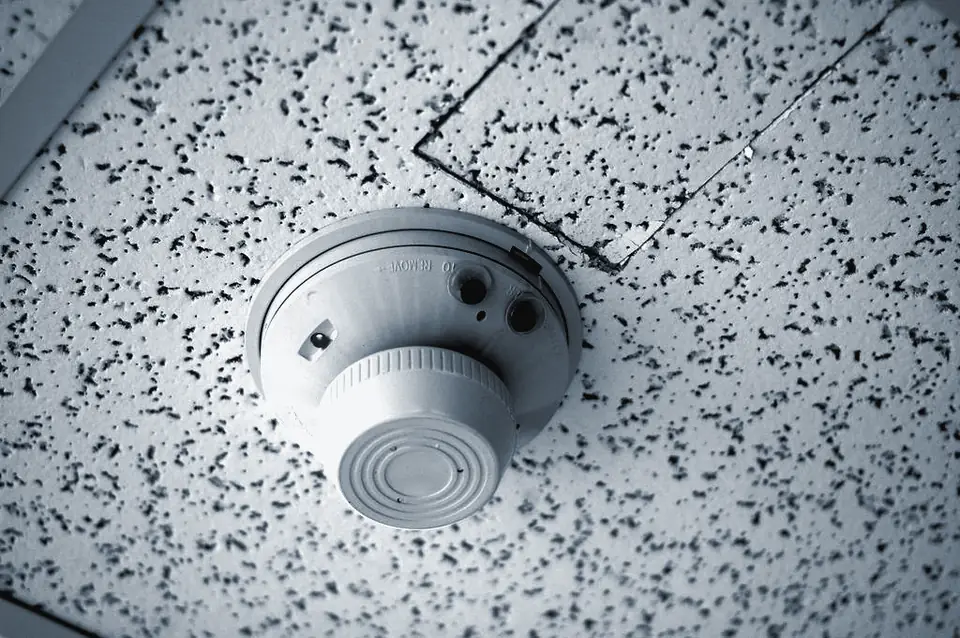
In a conventional system, detectors are connected to the control panel via circuits. Each circuit is a zone, for example a few offices or part of a corridor. When one of the detectors on a circuit goes into alarm, the panel sees an alarm on the circuit but does not know which device triggered it.
In this kind of system the detector makes the decision itself: if smoke or temperature exceeds a threshold, it switches to the alarm state.
Pros: - lower equipment cost; - simplicity for small buildings.
Cons: - the fire location is only known to the zone, so people have to walk around and check the rooms; - a contaminated detector does not report its condition; it simply starts giving false alarms or stops responding; - complex control scenarios for building systems are hard to implement.
Addressable system
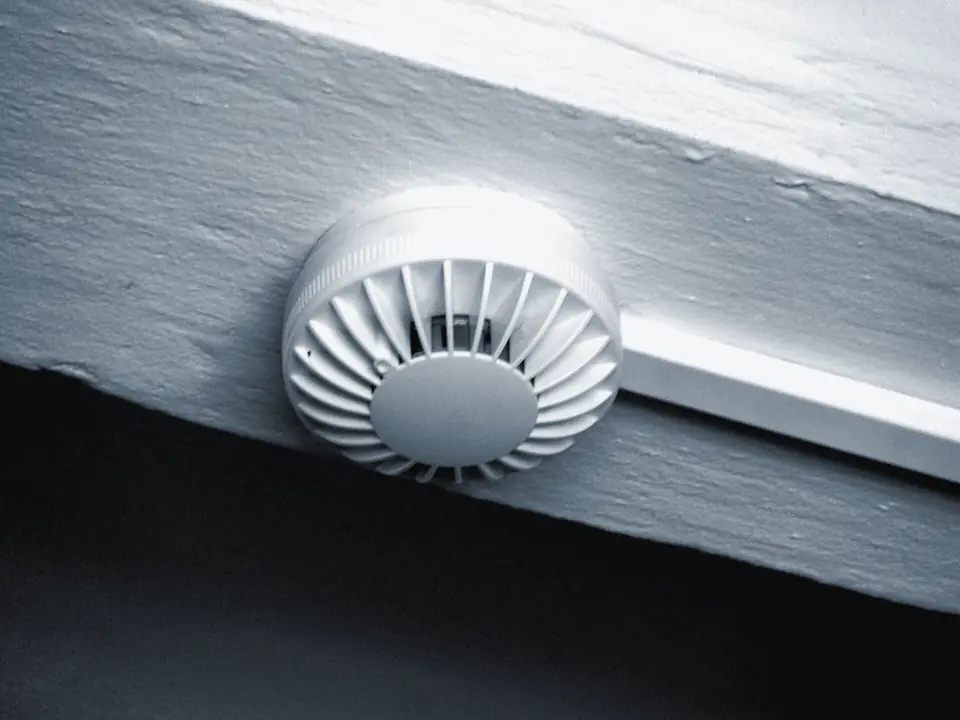
In an addressable system, every device has its own address, and all devices are connected to a shared addressable line (loop), often in a ring topology. The panel knows exactly which detector went into alarm and shows it on the display: "Alarm: 3rd floor, office 312".
A loop with short-circuit isolators stays operational if there is an open circuit or a short on one section: devices are reached from the other end of the loop.
Analog addressable system
This is the next step in addressable technology. The detector does not decide on its own whether there is a fire; instead, it continuously sends measured values (smoke level, temperature, etc.) to the panel. The panel makes the decision using algorithms that take into account the room type, time of day and how the signal changes over time.
Modern Siemens and Esser systems are built on this principle. Multi-criteria detectors analyze several parameters at once, which helps distinguish a fire from steam, dust or cigarette smoke.
What you get: - the exact event location, down to a specific detector; - fewer false alarms; - monitoring of contamination and health of each device, so maintenance becomes planned; - flexible zone-based control of smoke extraction, voice alarm, access control, elevators and ventilation; - the ability to expand the system and network panels together.
Comparison
| Parameter | Conventional | Addressable / analog addressable |
|---|---|---|
| Location accuracy | to the circuit (zone) | to a specific device |
| False alarms | more frequent | much rarer (multi-criteria analysis) |
| Detector condition monitoring | none | continuous, with contamination warnings |
| Complex control scenarios | limited | full |
| Scalability | poor | panel networks, expansion |
| Equipment cost | lower | higher |
| Maintenance cost on a large site | higher | lower |
Which to choose
A conventional system is worth considering for small buildings with simple logic: a small shop, an office with a few rooms, a plant room.
An addressable or analog addressable system is for anything larger: business centers, hotels, healthcare facilities, schools, warehouses, factories, residential complexes. On such sites the difference in equipment cost pays back through fewer false alarms, faster response and cheaper maintenance.
Tip: compare not just the equipment price but the cost of the system over its entire service life, including installation, maintenance and downtime caused by false alarms.
How we help
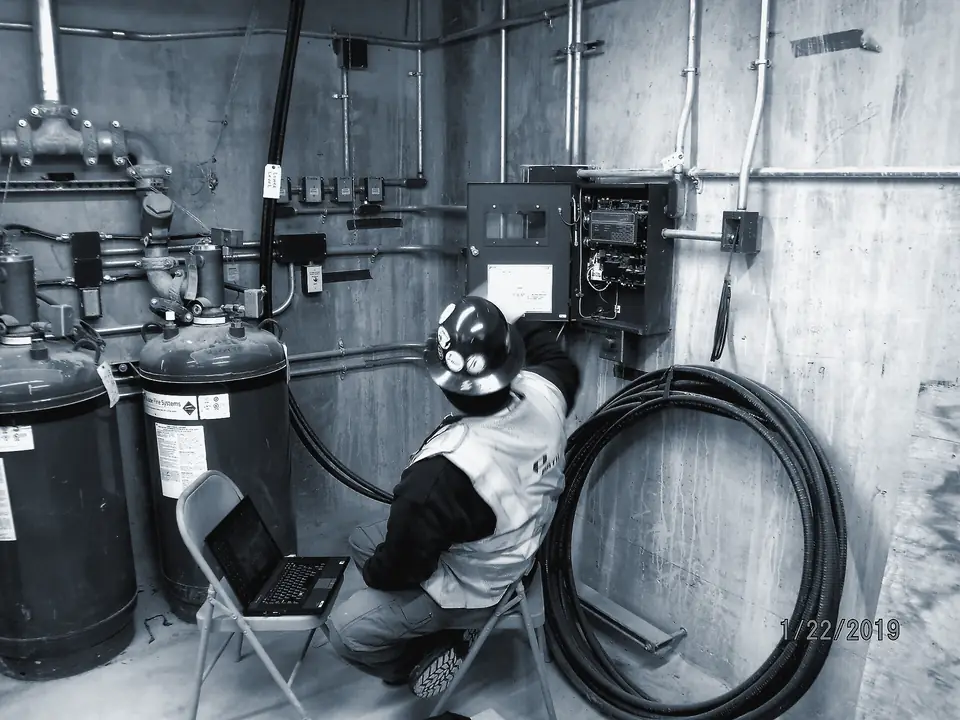
We survey the site, select the system type to meet code requirements and budget, then design and install it. As certified Siemens and Esser engineers, we configure these brands' analog addressable systems following the manufacturers' methods. Learn more on the Fire Alarm page.