During an air-raid alert, every minute counts. If alerting at a business, residential complex or school is switched on manually by a duty officer, delay is inevitable: the person may step away, miss the notification in the app, or simply not react in time. Automation removes this link from the chain.
What the system should do
- Receive official alert data for the relevant region without human involvement.
- Trigger alerting: sirens, light signs, voice messages, PA broadcast.
- Distinguish events: alert start, all-clear, change of threat level.
- Control equipment: open shelters, switch the amplifier channel, signal security staff.
- Report faults, so that a lost connection is not taken to mean "no alert".
- Show the status of all sites to the people responsible.
Data source
The system should take data from an official air-raid alert source and poll it regularly. Failures must be handled correctly: a network error does not mean all-clear. If there is no connection, the system should keep the last known state and signal a fault rather than "invent" an all-clear.
Alerting without an operator at the console
A combination of several channels works best:
- Siren for open areas and noisy workshops.
- Light signs duplicate the siren where it is hard to hear.
- Voice messages explain what to do and where to go. For schools and kindergartens, a calm voice works better than a harsh siren.
- PA broadcast: in shopping centers and offices a relay switches the amplifier channel, and an announcement plays instead of music.
Shelters and routes
Automation can open shelter doors and switch on lighting and ventilation inside, while voice messages remind people of the route. Businesses with several shifts should consider separate signals for staff.
Fault monitoring
The most dangerous state of an alerting system is when it has silently stopped working. That is why you need:
- a separate fault signal on loss of connection;
- hardware protection against hangs (watchdog);
- local storage of settings and audio messages;
- an event log and the ability to test every output.
How AB-ALERT does it
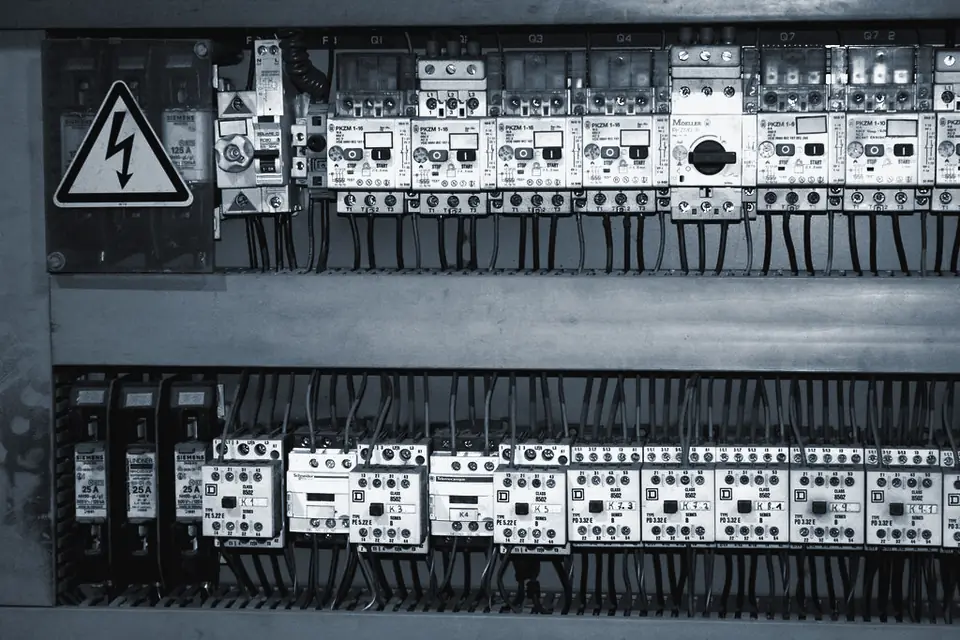
Our AB-ALERT system is built on exactly these principles. The server polls the official data source every 10 seconds, and the on-site device contacts the server itself every 5 seconds, so no open ports or public IP address are needed. About 5 seconds pass from alert to siren. The device has 8 independent relays with flexible logic and an audio output for custom recordings, a dedicated fault relay and a hardware watchdog, while the web panel shows the status of all sites on a map.
Where to start
Describe your site: type, floor area, existing sirens or PA system, number of buildings. We will propose an alerting scheme and a cost estimate. More details on the AB-ALERT page.