At most sites, security systems appear gradually, from different contractors and on equipment from different manufacturers. Security staff watch several monitors, events in different systems are not linked, and interaction scenarios exist only on paper in the design. Integration fixes this.
What integration delivers
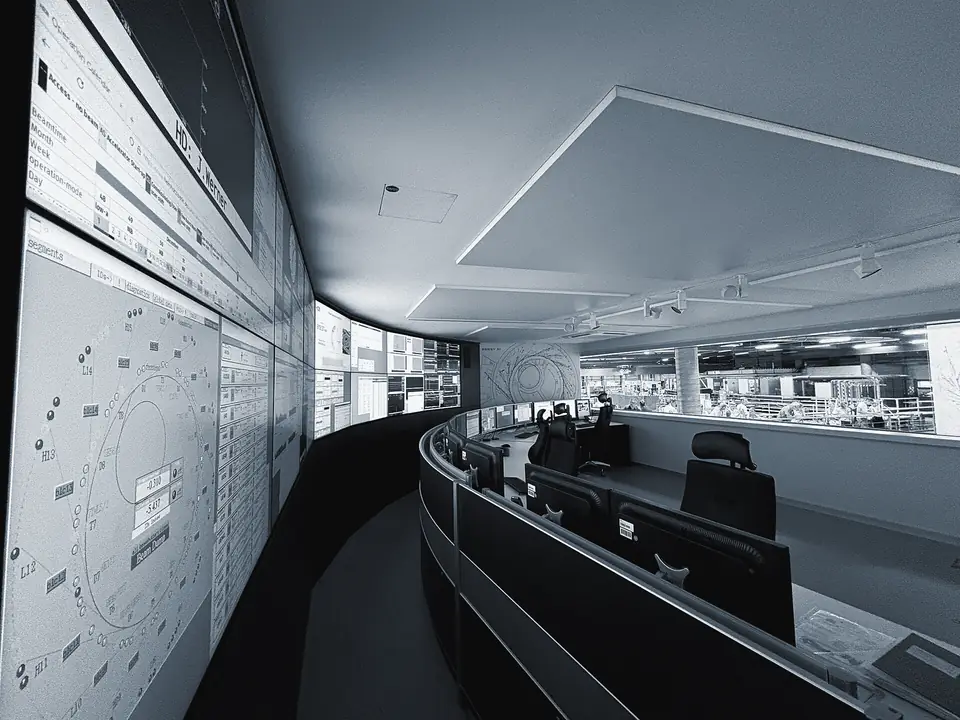
- Faster response: the operator sees the event, its location on the floor plan and the video at the same time.
- Automatic scenarios: the building responds to a fire or intrusion without human involvement.
- A single event log across all systems for investigations and reporting.
- Fewer staff errors in stressful situations.
The interaction matrix
Integration starts not with equipment but with a document: the cause-and-effect matrix. For each event, the response of every system is defined. For example:
| Event | Fire alarm | Access control | Ventilation | Elevators | Video |
|---|---|---|---|---|---|
| Fire on floor 3 | alerting in zones 3, 2, 4 | escape doors unlocked | shutdown, smoke extraction on floor 3 | to the main floor | floor 3 cameras to the monitor |
| Server room door forced | — | alarm | — | — | server room camera to the monitor, bookmark in the archive |
| Air-raid alert | — | shelter opened | — | — | — (AB-ALERT triggers alerting) |
Two levels of integration
Hardware level
Actions critical to life safety (unlocking emergency exits, shutting down ventilation, starting smoke extraction, controlling elevators) are implemented in hardware: via relay outputs and modules of the fire alarm control panel. They will work even when the integration servers are unavailable.
Software level
Displaying events on floor plans, linking events to video, a single log, reports and convenient interfaces are implemented in software. This is where protocols and APIs are used:
- Modbus RTU/TCP, widespread in industrial automation;
- BACnet, the building automation standard;
- OPC UA for industrial systems and SCADA;
- Manufacturer APIs of access control and CCTV systems;
- MQTT for lightweight IoT solutions.
Platforms
Large sites use building management platforms (BMS/PSIM), for example Siemens Desigo CC. For mid-sized sites, a lightweight custom solution is often more practical: an operator interface with floor plans, a log and video, without unnecessary features. We deliver both options.
Testing
Every row of the interaction matrix is verified on real equipment: the event is simulated and the response of each system is recorded. The results are documented in a test report.
How to get started
Start with an audit: which systems are already in place, which protocols they support and which scenarios are needed. More details on the "Systems Integration" page.