A sprinkler system puts out a fire with water exactly where it starts and exactly when the temperature reaches a dangerous level. It needs no human involvement and often extinguishes a fire at an early stage, before fire crews arrive.
How a sprinkler works
A sprinkler is a nozzle closed by a heat-sensitive element: a glass bulb filled with liquid or a fusible link. When the temperature at the ceiling rises to the activation threshold, the bulb bursts and pressurized water is sprayed over the area below the sprinkler.
Important: only the sprinklers above the fire activate, not the whole system. This reduces water damage.
System types
- Wet pipe – the pipework is permanently filled with water. The fastest and most common type, for heated spaces.
- Dry pipe – the pipework is filled with pressurized air, and water enters after activation. For unheated spaces where water could freeze.
- Pre-action – water is admitted to the pipework only after confirmation from the fire alarm. For rooms where accidental water discharge is undesirable.
- Deluge – the sprinklers are open, and water is delivered to the entire zone on a signal. For water curtains and special process areas.
Control valve set
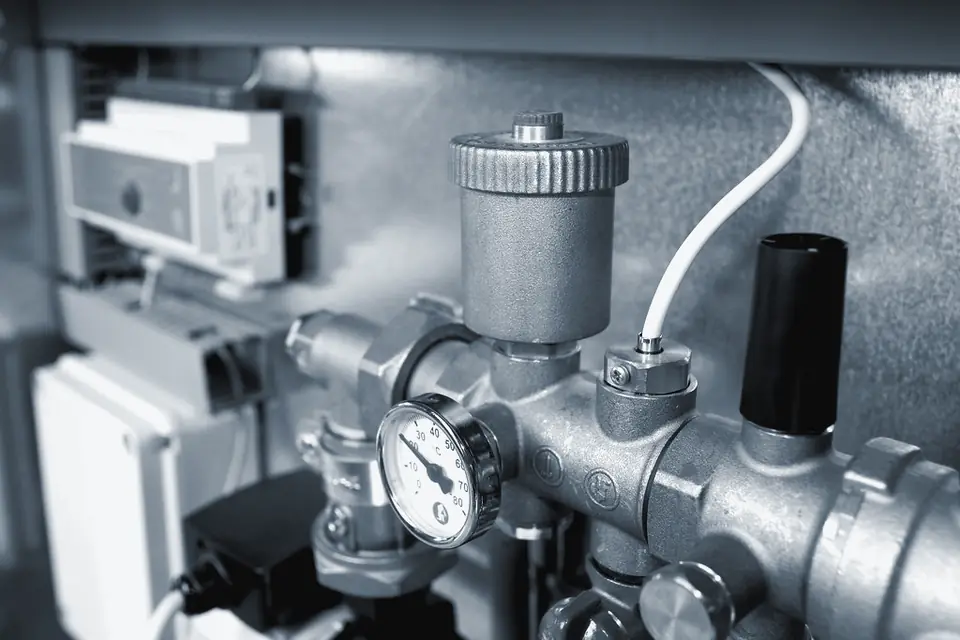
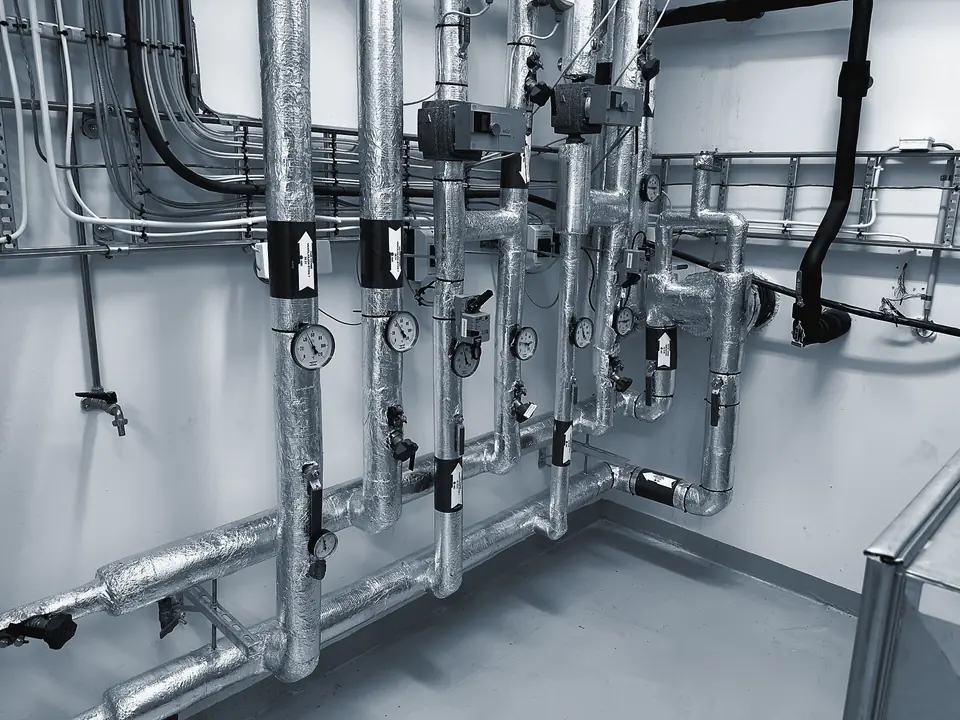
Each sprinkler section has a control valve set: a valve, pressure and flow switches, isolating valves and pressure gauges. The valve set registers activation and sends a signal to the fire alarm, while isolating valves with position sensors make it possible to verify that nobody has shut off the water.
Fire pump station
The municipal water main rarely provides the pressure and flow a sprinkler system needs. That is why a fire pump station is built:
- duty and standby pumps – the standby pump covers a duty pump failure;
- jockey pump – maintains system pressure and compensates for small leaks so the main pumps do not start unnecessarily;
- control cabinets with automatic and manual start;
- water storage tank, if the main cannot provide the design flow;
- monitoring of pump, valve and water level status with transmission to the monitoring station.
Reliable power for the pumps is critical, so a backup power supply is provided.
Design
The basis of the design is the hydraulic calculation: the design density and area of operation are determined by the hazard class of the space, and the calculation shows the pressure and flow required at the most remote sprinkler. This determines pipe diameters, pump parameters and tank volume. Sprinkler placement relative to racks, beams and ventilation is also taken into account.
Maintenance
A sprinkler system needs regular checks: system pressure, valve condition, switch operation, pump start and sprinkler condition (paint, dust and damage affect activation). We carry out scheduled maintenance and document all checks.
Learn more on the Fire Suppression page.